WiNGS
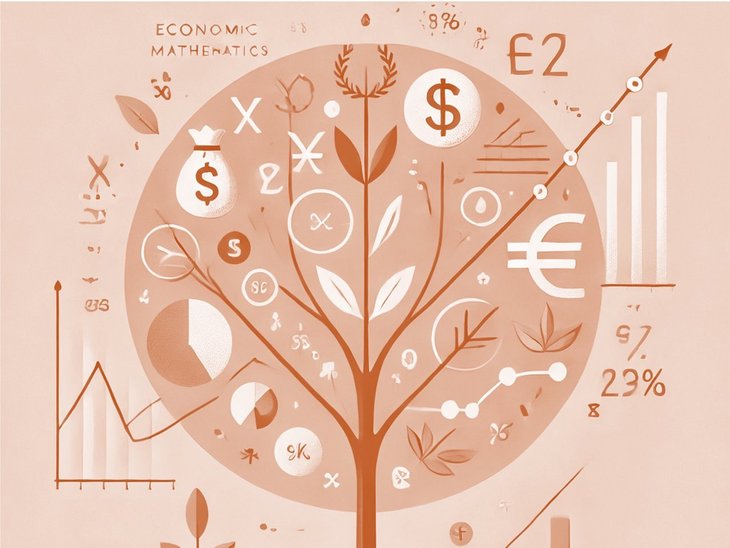
As part of the WiNGS research project, Landshut University of Applied Sciences is developing, testing and evaluating ways of incorporating environmental and social aspects into basic mathematics lectures in the field of economics. The aim is therefore to ensure that all three dimensions of sustainability (environmental, economic and social) are taken into account right from the start of the quantitative foundational training of business experts. Whilst business administration as a whole is increasingly taking all three dimensions of sustainability into account, the basic mathematical training in economics degree programmes still focuses almost exclusively on economic applications, whilst environmental and social aspects are left out or, at best, factored in as costs.
The project is receiving funding from the “Foundation for Innovation in Higher Education” as part of the “Freiraum 2025” programme for a period of two years (1 April 2025 – 31 March 2027).
Project lead at Landshut University of Applied Sciences: Prof. Dr. Maren Martens
PhyLFlex – Physics-based, adaptive energy management for sector coupling and distribution network flexibility
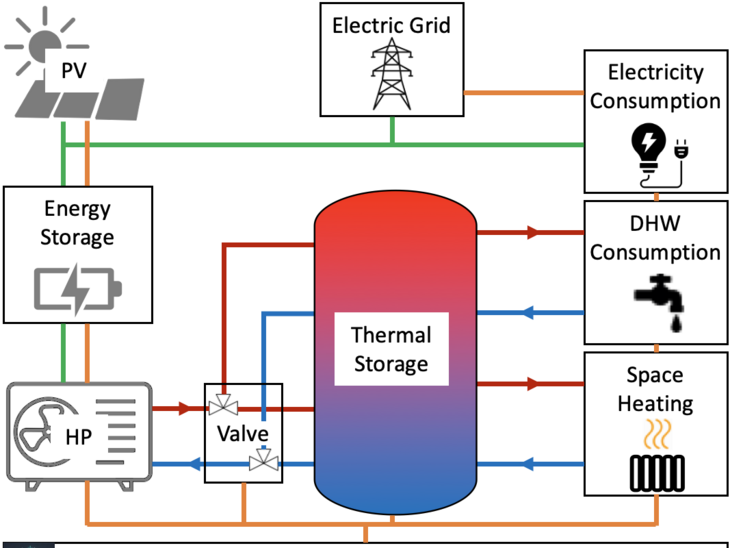
As part of the PhyLFlex research project, Landshut University of Applied Sciences is collaborating with the Technical University of Munich, Siemens AG, ÜZW Energie AG and other associated partners to improve the resilience and efficiency of distribution networks in Germany through the development and implementation of advanced building energy management systems (GEMS). The aim is to optimise energy consumption through the use of effective GEMS, thereby ensuring grid stability without the need for unnecessary expansion of the electricity grids.
The project is funded by the Federal Ministry for Economic Affairs and Climate Action (BMWK) as part of the German government’s 8th Energy Research Programme for a period of three years (1 April 2025 – 31 March 2028).
Overall project management: Prof. Dr. Maren Martens
Locomotion
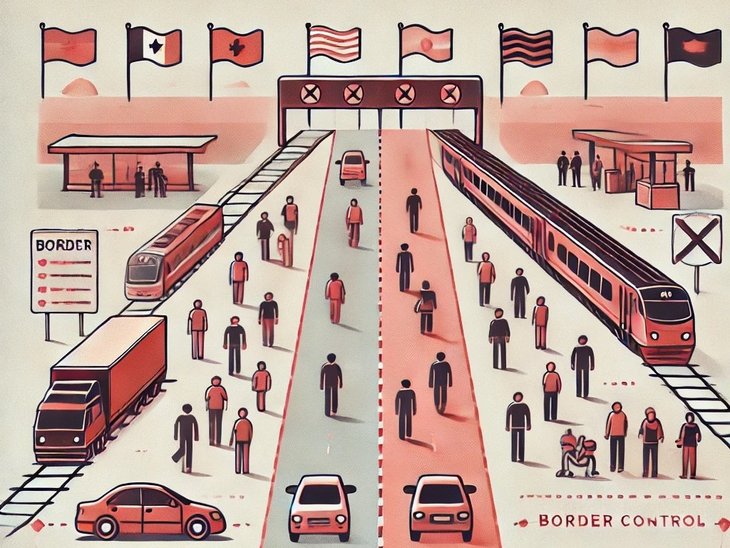
As part of the Locomotion research project, Landshut University of Applied Sciences is collaborating with the Institute of Technology and Business in České Budějovice to analyse the commuting patterns of Czech workers travelling to German employers and to make these journeys more efficient in the future. The aim is to develop optimised, future-proof models for commuter travel in order to make it more sustainable in economic, environmental and social terms, and to boost the labour market in the border region.
The project is funded by the Bavarian-Czech University Agency (BTHA) as part of the “Joint Czech-Bavarian Research Projects 2024–2026” funding programme until the end of 2026 (1 July 2024 – 31 December 2026).
Project lead at Landshut University of Applied Sciences: Prof. Dr. Maren Martens
ReLLFloW
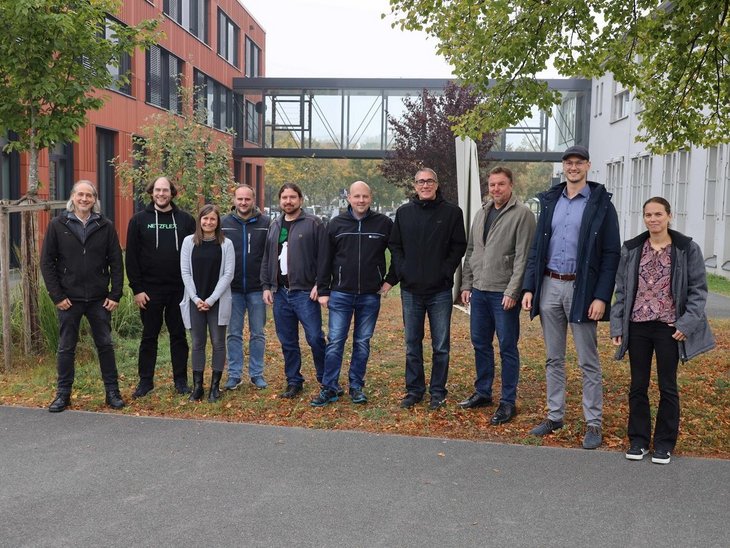
As part of the ReLLFloW project, Landshut University of Applied Sciences and NetzFlex UG (NFX), with the support of Stadtwerke Landshut (SWLA) and the Studentenwerk Niederbayern/Oberpfalz (STWNO), are investigating how residents of halls of residence and blocks of flats can become active drivers and users of the energy transition. The aim is to adapt the buildings’ electricity consumption flexibly and automatically to the current load on the electricity grid, in order to facilitate load management for grid operators.
The project will run for three years (1 October 2023 – 30 September 2026) and is funded by the Bavarian Research Foundation (BFS) under the funding scheme ‘High Technologies for the 21st Century’.
Project lead, Landshut University of Applied Sciences: Prof. Dr. Maren Martens
Impact for the Future
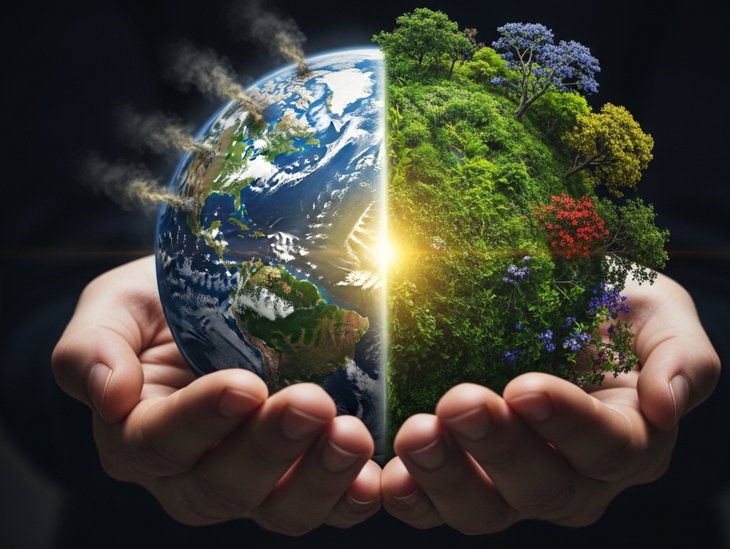
Impact for Future (IFF for short) is a unique, interdisciplinary and cross-university project that brings together students and lecturers from all disciplines to embed impact-oriented approaches and sustainability in university teaching.
We want every student, lecturer and start-up in the region to engage with the themes of impact-oriented approaches, sustainability, systemic and sustainable thinking and action, and social entrepreneurship. Of particular importance to us is the so-called ‘triple bottom line’, which means that sustainable development is only possible through the simultaneous pursuit of environmental, economic and social goals. These values are becoming increasingly important in today’s working world.
Find out more about Impact For Future