

Accredited degree program
Dual social work with in-depth practice
Bachelor of Arts
The aim of the dual undergraduate Bachelor's degree programme in Social Work with in-depth practice is to enable students to act independently and professionally in various fields of social work practice on the basis of scientific knowledge and well-founded methods of action.
| Start | Winter semester |
|---|---|
| Admission Criteria | Open admission (no numerus clausus) |
| Application period | 15.04.2026 - 31.08.2026 |
| Study format | Full time, Dual with in-depth practical experience |
| Study cost | None (only semester fee) |
| Normal duration | 7 Semester |
| Language | German |
| ECTS | 210 |
| Accredited degree program | |
| |
Study programme
In the first two semesters of the dual study programme, the theoretical foundations are laid and the content hardly differs from the "Social Work" degree programme.
From the third semester onwards, in addition to the practical semester, accompanying practical phases of at least 225 hours are completed with a permanent cooperation partner from the field of social work. The practical phases are embedded in so-called theory-practice transfer modules (TPV), whereby theoretical expertise is combined with practical and personal experience and reflected upon in a topic-related manner. The Bachelor's degree is recognised by the state.

Practical semester
The Practical Training Department informs students and practical training centres about the requirements and procedures before, during and after a practical semester.
Learn morePractical phases
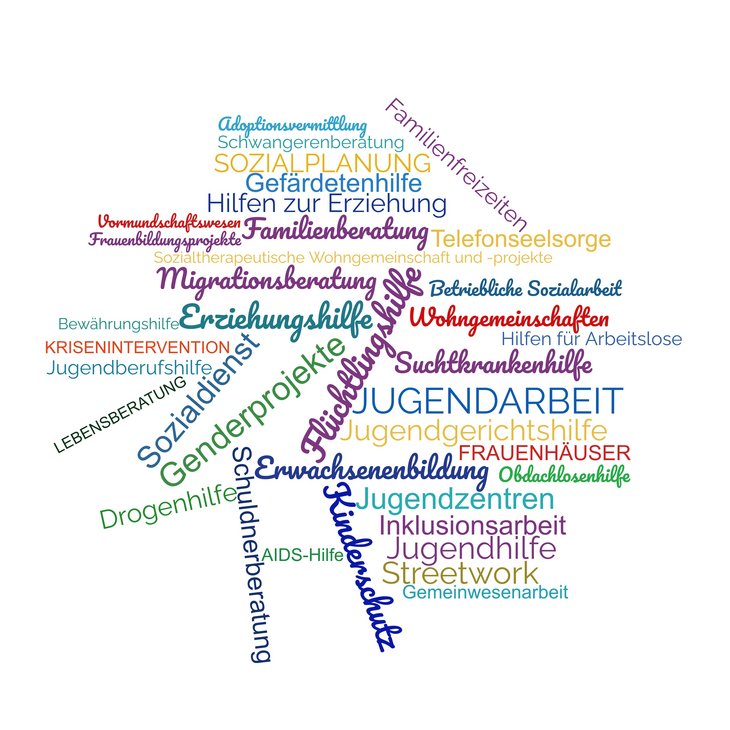
In addition to the practical semester, at least 900 hours must be completed in a field of social work or in the area of child and youth welfare as part of the dual degree programme with in-depth practical experience during the course of study. As a rule, these working hours are completed during the lecture-free periods, but can also be completed during the semester by individual arrangement, taking into account the lecture schedule and the placement options and requirements of the institution.
- Gain relevant practical experience during your studies
- Remuneration during the degree programme
- Acquisition and development of key qualifications in practice
- Establishing a bond with the organisation and network partners
- Increased chances of being taken on as an employee (without induction) and faster promotion prospects
- Securing highly qualified and motivated junior staff at an early stage
- Close ties between students and the institution
- Comprehensive practical and organisational experience
- Comprehensive familiarisation phase - there is enough time to find out how best to deploy future graduates
- Elimination of time-consuming familiarisation periods when taking on an employment contract