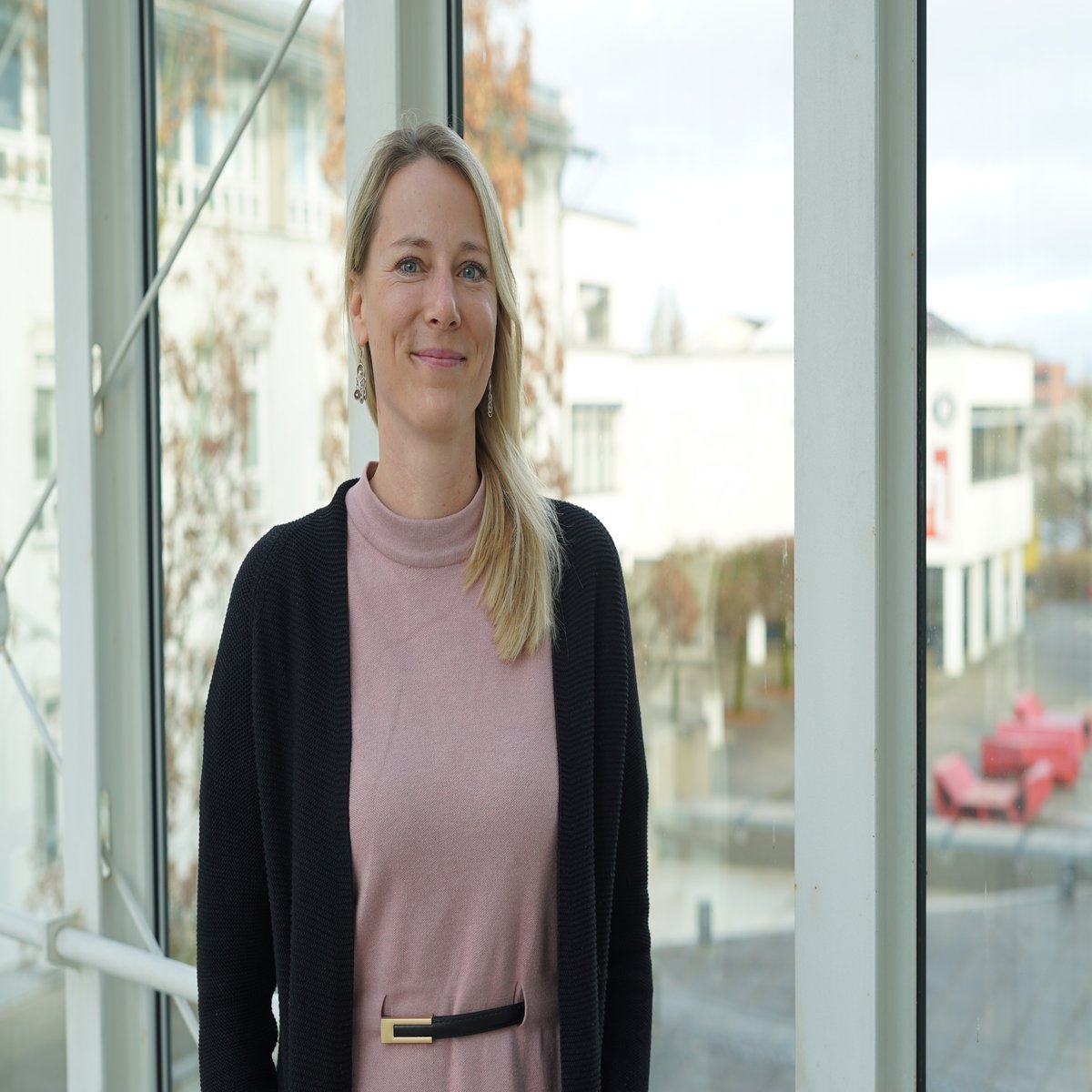
When Dr Judith Stoltz talks about her work, it quickly becomes clear how important the topic of ‘global health’ is to her, along with the associated aspects of healthcare, sustainability, human rights and multidisciplinary collaboration. “Health does not stop at national borders, nor is it a given for everyone within a city or a country. Fair and high-quality healthcare can only succeed through teamwork between different disciplines and professionals. Global challenges such as climate change, crises and social inequality worldwide demonstrate how important it is to have healthcare that is accessible to all and strong health systems,” explains Stoltz. That is why the new lecturer for special tasks on the Physician Assistant programme is committed to ensuring that people have equal opportunities in the healthcare sector, regardless of their location, background or social circumstances. As the medical director of practical teaching, the experienced clinician brings not only professional expertise but also a wealth of international experience to the training of students.
A wide range of teaching with a practical focus
Her courses include ‘Microbiology, Infectious Diseases and Hygiene’, ‘Inpatient and Outpatient Medicine’, and ‘Fundamentals of Medicine’, as well as practice-oriented courses such as surgical wound care and suturing techniques, stoma care, plaster casting, blood sampling and the insertion of peripheral catheters. She also places particular emphasis on the local, needs-based production of simulation models – such as suture pads developed in-house, which are created using a 3D printer and silicone casting and produced together with the students. In this way, she aims to enable students to practise skills independently, realistically and in a resource-efficient manner.
International experiences shape her perspective on medicine
After finishing school, her path took her to Latin America: she spent a year of voluntary social service with the Salesian Sisters of Don Bosco, working with children and young people in socially deprived neighbourhoods of Venezuela (Puerto Ayacucho, Valencia, Caracas). “That’s where I decided to study medicine,” says Stoltz. She completed her degree in Aachen on a deliberately chosen practice-oriented model course in medicine, supplemented by a Master’s in Global Health in Maastricht, the Netherlands. For her compulsory placements, Stoltz returned to South America and worked in Mexico, Bolivia, Peru and Chile.
There she learnt how important it is to make diagnoses even without technical aids, through thorough medical history-taking and examination, as well as respectful communication. “These experiences have taught me to stay focused on the person, to listen and observe closely, and to ask targeted questions,” she emphasises. Her career path has taken her to, among others, Aachen University Hospital, LAKUMED Landshut-Achdorf Hospital, Landshut Children’s Hospital and, finally, Mallersdorf Clinic. She currently works there as a senior registrar in visceral and minimally invasive surgery – enabling her to apply her clinical experience directly to her teaching.
Current projects on sustainability and practical relevance
Stoltz is currently working on an interdisciplinary course with her colleague Theresa Eberl from the Department of Midwifery, which aims to embed sustainability more firmly in the day-to-day practice and teaching. The focus is on the mindful use of resources – from materials and time to human capacity. As a lecturer with special responsibilities, she values the flexibility and the opportunity to actively help shape this still-young degree programme. “It is important to ensure medical care by thinking more innovatively and working closely with patients,” she says. She is particularly impressed by the students’ motivation and open-mindedness: “There are many committed students who do excellent work during their placements. We also hear this feedback from our practice partners and institutions.”
As well as the subject matter, Stoltz also wants to instil an open-minded attitude in her students: “Especially when you’re young, it’s good to know what you enjoy doing and which direction you want to go in. At the same time, I’ve realised that you can’t plan every step down to the last detail. Some things simply fall into place over time.” In line with her motto, “The path emerges as you walk,” it is therefore important for the doctor and mother of two to always remain open-minded, to build her own networks, to pass on her knowledge and enthusiasm for healthcare work, and to simply let some things develop naturally.
Photo: Landshut University of Applied Sciences
(may be used freely provided the source is credited)