MINT-Wednesday
Landshut University of Applied Sciences offers pupils aged ten to 16 years an application-orientated and practical insight into MINT topics and MINT sciences with its "MINT Wednesday" format.
The young people explore the "secrets of technology" in various workshops in seminar rooms and technical laboratories of the MINT faculties at the university.
Review
The shatterproof egg
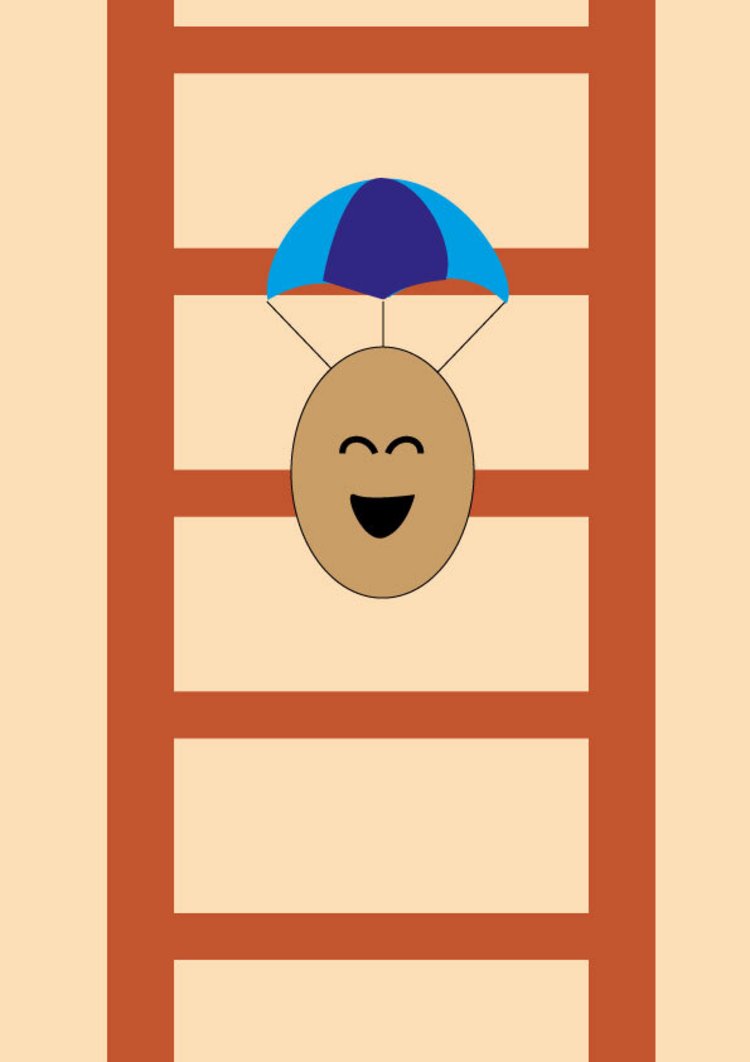
The participants developed creative constructions to allow a raw egg to fall undamaged from the first floor - onto the grass or stone floor. Using the materials provided, they created original models such as a mushroom rocket, Iron Flying Henry or Sofia Flyer 2.0. Four eggs survived the fall completely, two had only slight cracks. Everyone involved did a great job - and there were great prizes for the best ideas.
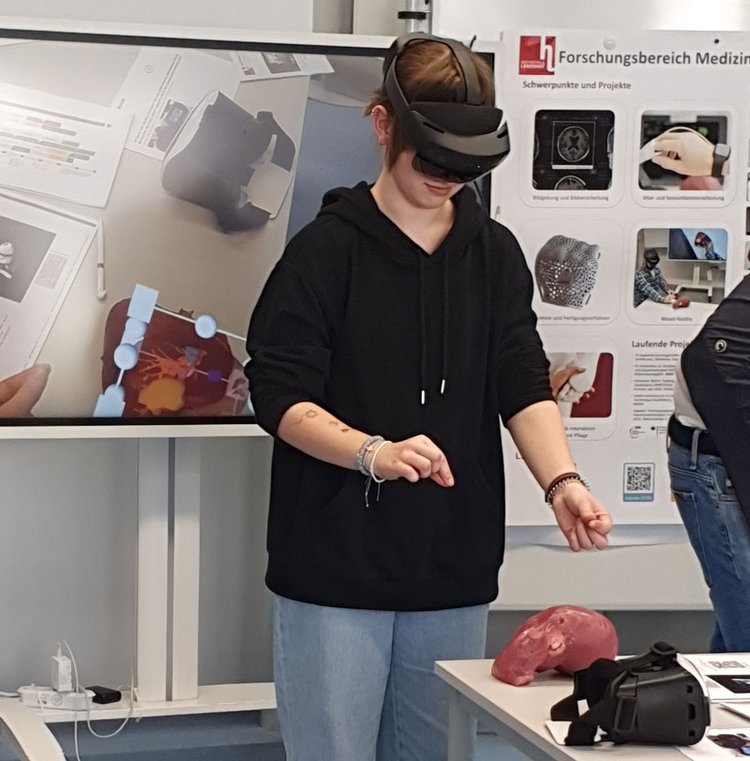
Escape Lab in medical technology
The participants of the Girls' Day Academy visited the Escape Lab, an exciting challenge in the biomedical laboratory. Using modern diagnostic procedures such as ultrasound and X-rays, they solved various tasks and gained insights into medical imaging. A particular highlight was the endoscopy and visualisation of the vessels in a liver using augmented reality - a fascinating insight into the world of biomedicine.
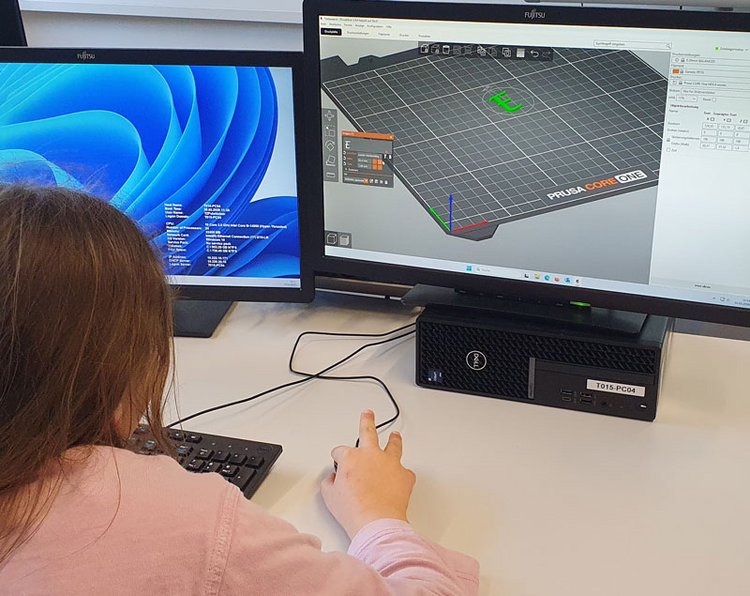
Planning a factory in 3D
At TZ PULS, everything revolved around technology, creative ideas and the professions of tomorrow. The participants had the opportunity to immerse themselves in this world. They made their own small models on the 3D printer, worked with various tools and took part in a guided tour of the learning and innovation factory. They were able to observe how ideas are created, how modern technology is used and how varied technical professions are.
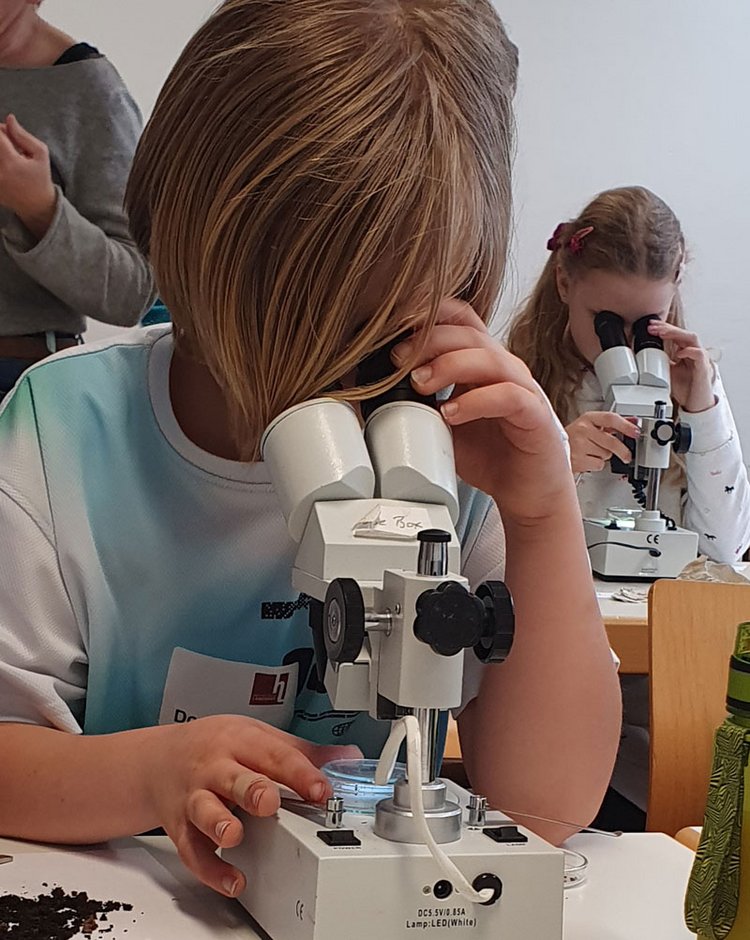
Microworlds
During the microscope work, we immersed ourselves in a fascinating micro-world. We discovered the fine nettles of the stinging nettle, which looked like tiny, pointed tubes under the microscope. With the seeds, it was striking how many of them adhered to leaves, often with small hooks or sticky structures.
The samples of moss, lichen and especially compost revealed an astonishing variety of microorganisms. We observed pseudoscorpions, springtails and much more. These impressions made it clear how much hidden life can be found in even the smallest natural samples.
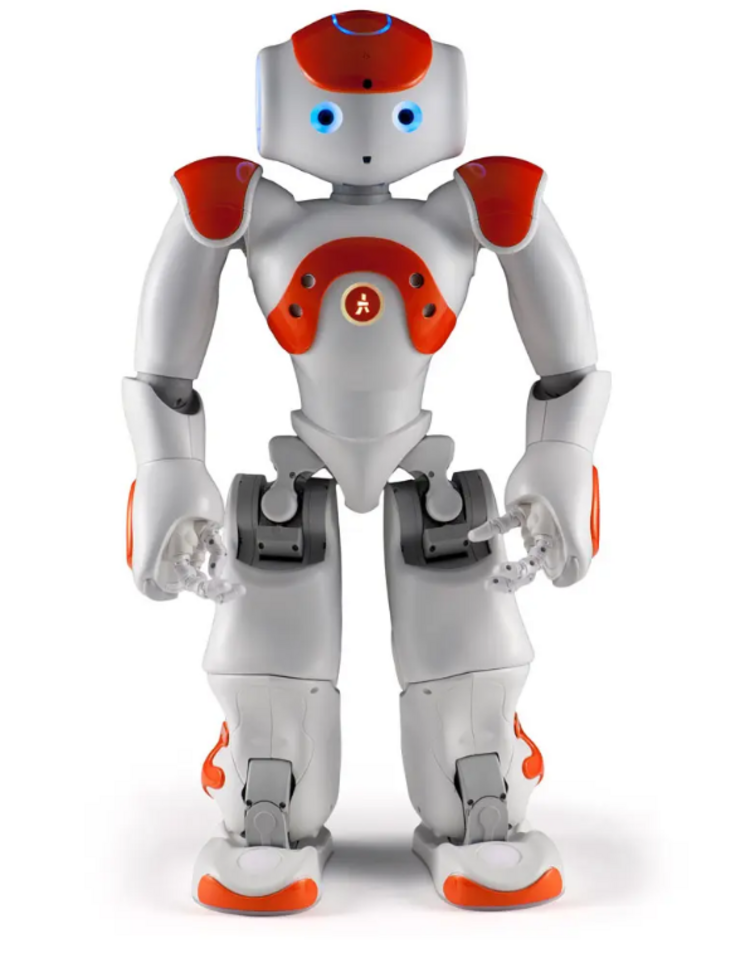
NAO robot and 3D printing lab
In the workshop "We make NAO robots dance", the participants programmed their own movement sequences for the humanoid NAO robot. At the end, the robot presented a short choreography: it played music, changed the light colours and moved all its limbs rhythmically to the beat.
We then visited the 3D printing lab. The engineer presented various printing processes, showed numerous printed examples and finally demonstrated a printing process in which Chinese characters were produced.
Lightweight construction & paper aeroplanes
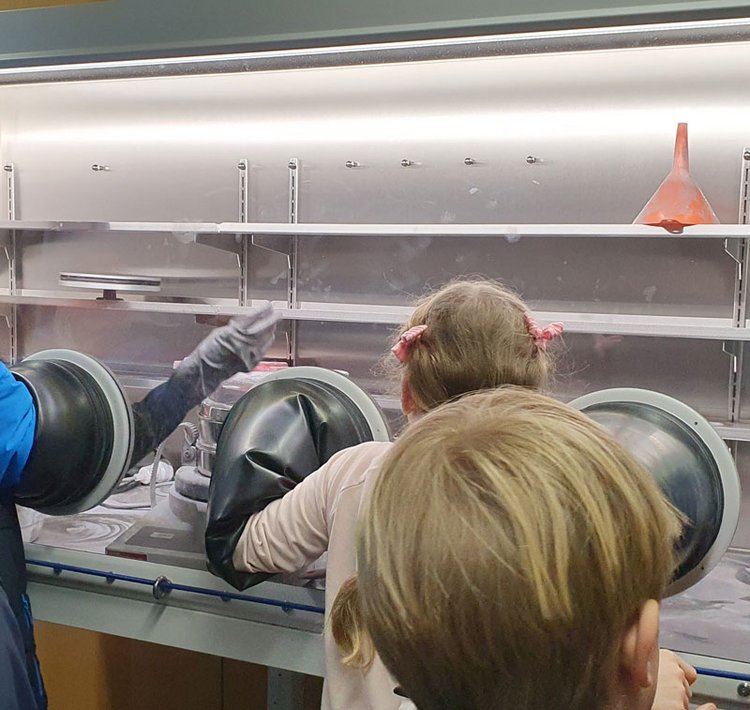
The "Lightweight construction & paper aeroplanes" workshop began with a tour of two lightweight construction laboratories. The tour lasted around 40 minutes, as the participants asked a lot of questions and showed great interest. Afterwards, there was enough time for the paper aeroplane competition. The groups competed in four categories: Distance, length, aerobatics and hitting the target.
The mix of insights into research and hands-on trial and error made for a lively and motivating atmosphere.
Regional MINT Day 2026
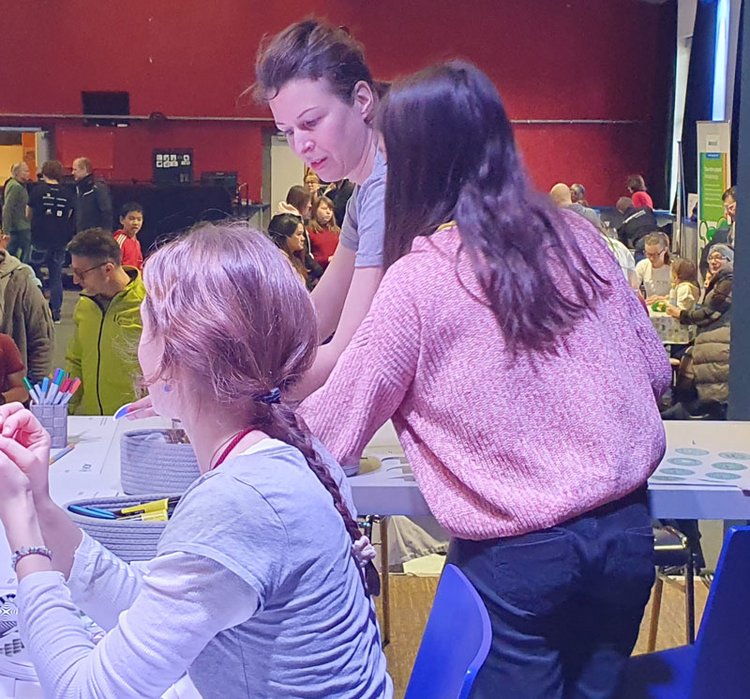
The STEM Day was very well attended and offered many different stations for children and young people aged 8 to 16. The programme was varied: there were experiments, hands-on stations and exciting workshops on mathematics, computer science, natural sciences and technology. Whether it was a spirit of research, curiosity or creativity - there was plenty on offer for children, young people and their parents.
Landshut University of Applied Sciences was also represented with various activities: "We make print - and buttons!" and "Flextangles: Turn yourself into new perspectives!". The offers were very well received and invited visitors to try out and design.
Augmented reality minigolf
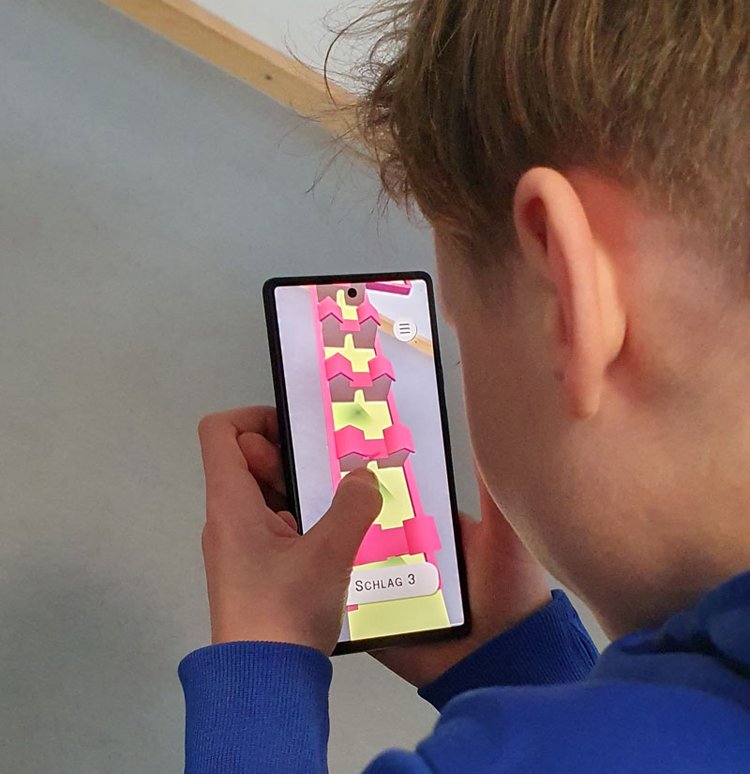
In January, we realised our own augmented reality minigolf project. A complete minigolf course was first created in Unity, including the course layout and obstacles. After completion, the course was transferred to a smartphone and run there as an AR application.
The combination of real environment and virtual course made it possible to play the self-created minigolf level directly on the mobile phone. The virtual course was embedded in the real space, creating an interactive minigolf experience.
Christmas magic with 3D pens
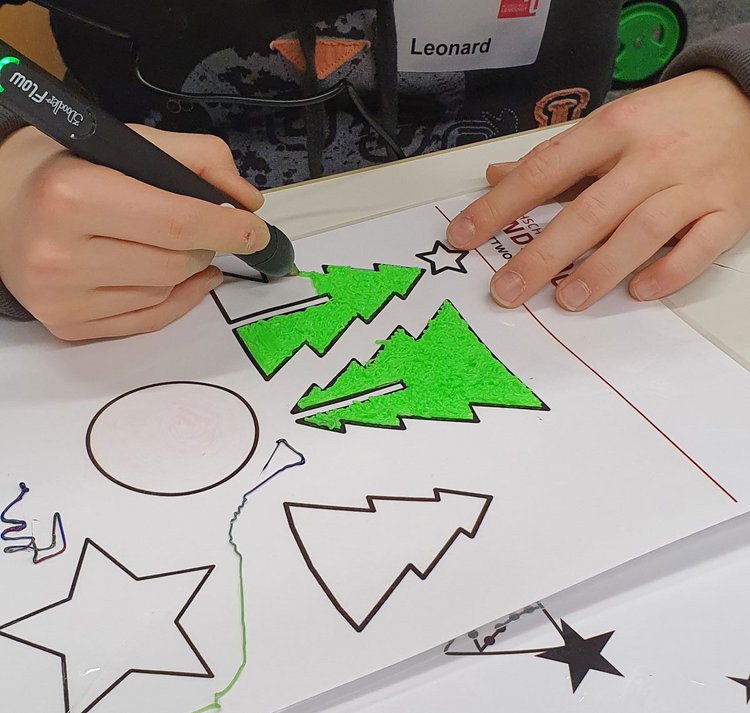
A 3D pen is ideal for creating small, unique objects. You will learn the technique and how to use the pen. Imagination, patience and a steady hand are important for individual creations. With gold and silver filament, festive works such as 3D Christmas trees, snowflakes and poinsettias were created.
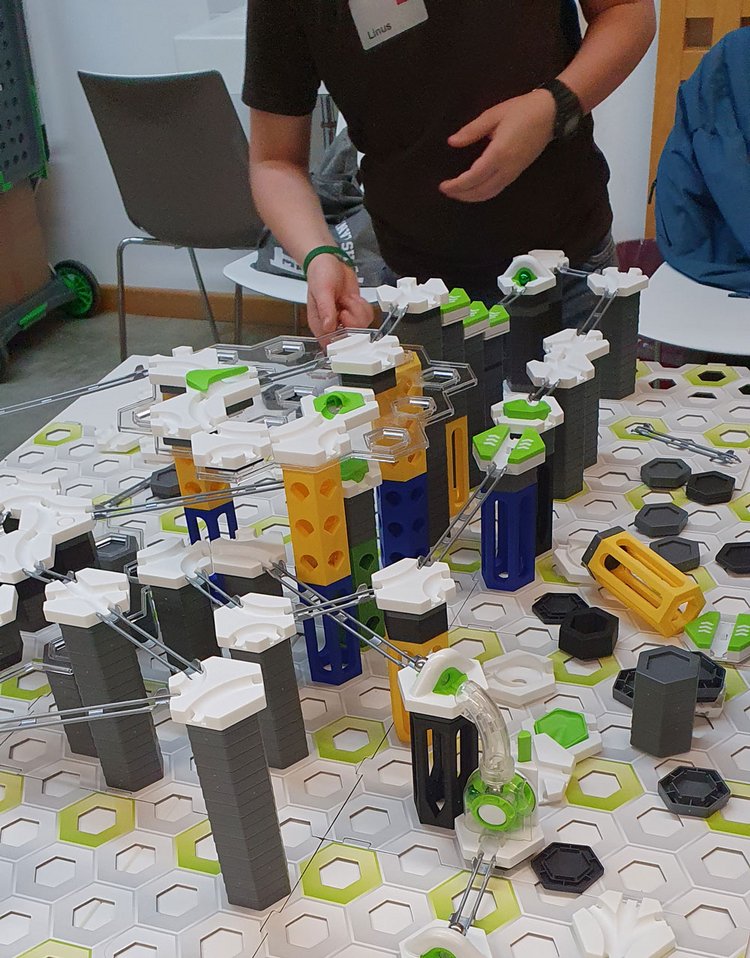
GraviTrax XXL
Thanks to the generous support of the MINT-Forum e.V. by Christoph Neub, we had 25 complete Gravitrax sets at our disposal. With this impressive material, the participants were able to give free rein to their creativity and develop three extraordinary marble runs.
The common goal was to beat the running time of 1 minute and 42 seconds. Particularly noteworthy is an extremely ingenious track on which the ball travelled for almost that long. In addition, two constructions were created in which the ball travelled endlessly - a fascinating example of the possibilities offered by Gravitrax.
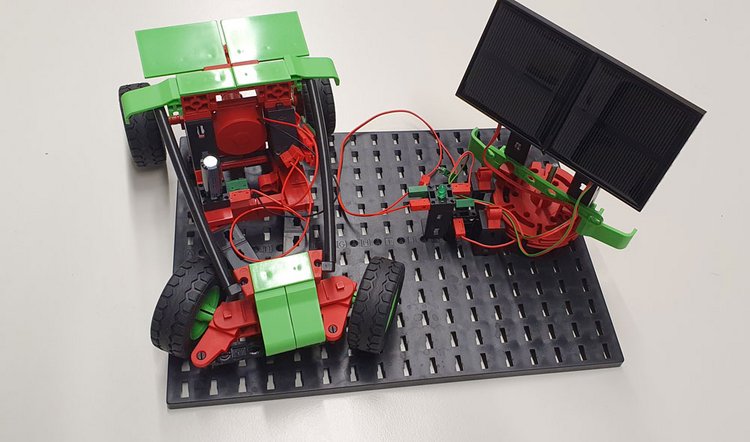
Solar and fuel cell vehicles
With the Fischertechnik Green Energy and Fischertechnik H2O Fuel Cell Car sets, numerous exciting vehicles could be built - mainly solar-powered. Particularly noteworthy are the solar fuelling station and a vehicle with a capacitor, which impressively demonstrate the possibilities of modern energy technology.
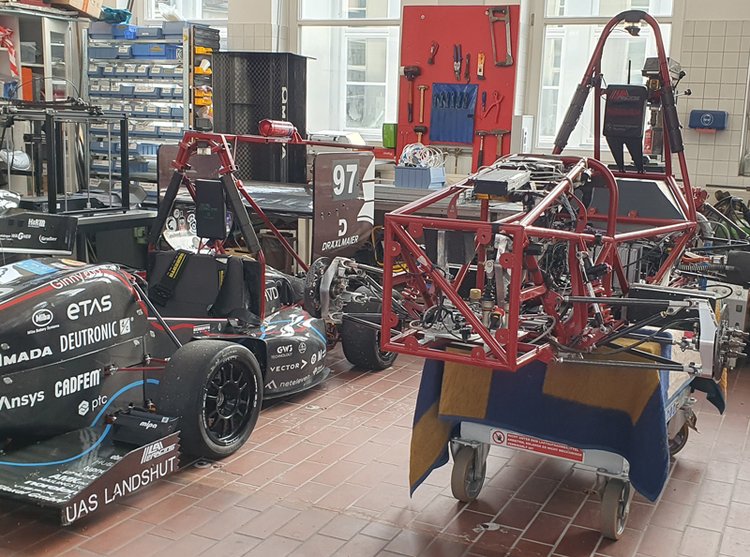
Vehicle laboratory tour with special highlights
Florian Federmann gave a tour of the vehicle laboratory, where a cat car converted into an electric vehicle and the LA Racing Team were on display. In the hydraulic engineering laboratory, the participants were able to let "Jonny" swim in the flow model and observe whirlpools. A special highlight was the driving simulator - thanks to the small group, each participant was able to drive for almost ten minutes.
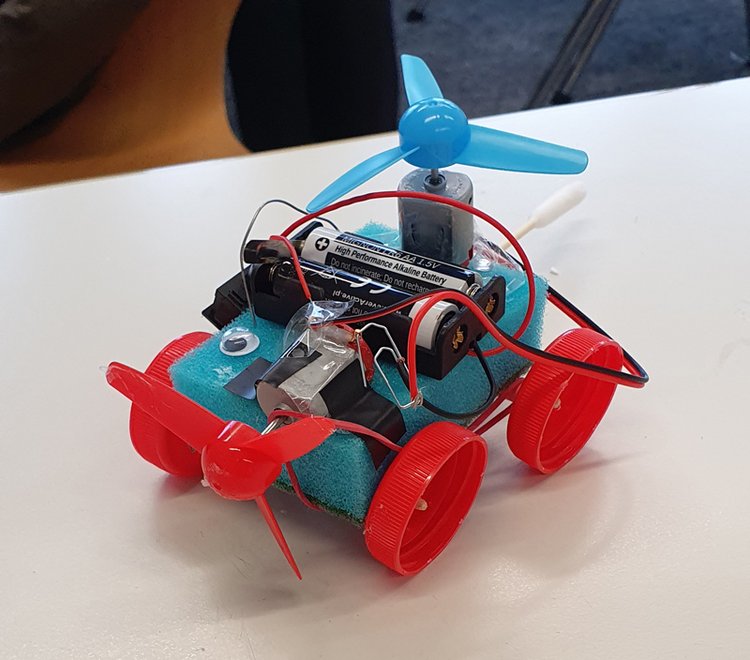
Free ideas with motor, batteries & switch
The task: a 3V DC motor, two AA batteries and a switch - plus a table full of craft materials. Without any further specifications, creativity and own ideas were required. It was a challenge at first, but the freedom quickly generated enthusiasm. All participants had fun, and impressive constructions were created: from drawing robots to four-wheeled vehicles that moved freely.
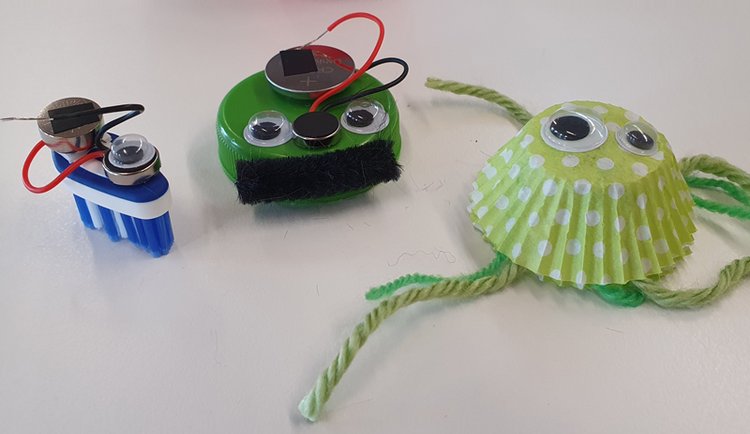
Workshop with two stations: Vibro-bots & 3D pens
Under the guidance of Silke Hofmann, the participants built lively vibro-bots that scurried across the tables. At the same time, student Diana Bomke supervised the 3D pencil station, where real works of art were created. The "dragon" template was particularly popular, requiring a lot of patience and perseverance - and producing impressive results.
Summer holiday programme 2025
On 6 August 2025, Landshut University of Applied Sciences opened its doors for a special event as part of the city of Landshut's holiday programme. In cooperation with MINT-Zukunftswerkern, a varied day of experiences was organised for children and young people aged 10 to 16. The aim was to convey the fascination for maths, IT, science and technology - STEM for short - in a playful and practical way...
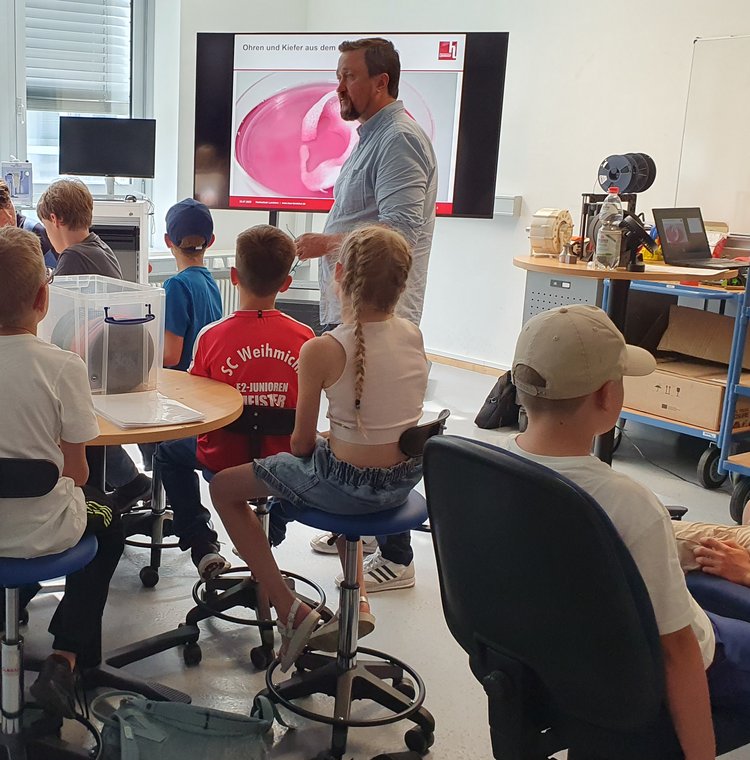
Introduction to 3D printing
All participants started together with an introduction to 3D printing. The 10 and 11-year-olds then worked with 3D doodlers (Alexey Istratov), while the 12 to 14-year-olds tinkered with the CAD programme (Peter Roidner). The workshop was very well received - the only disappointment was that the two hours were over far too quickly.
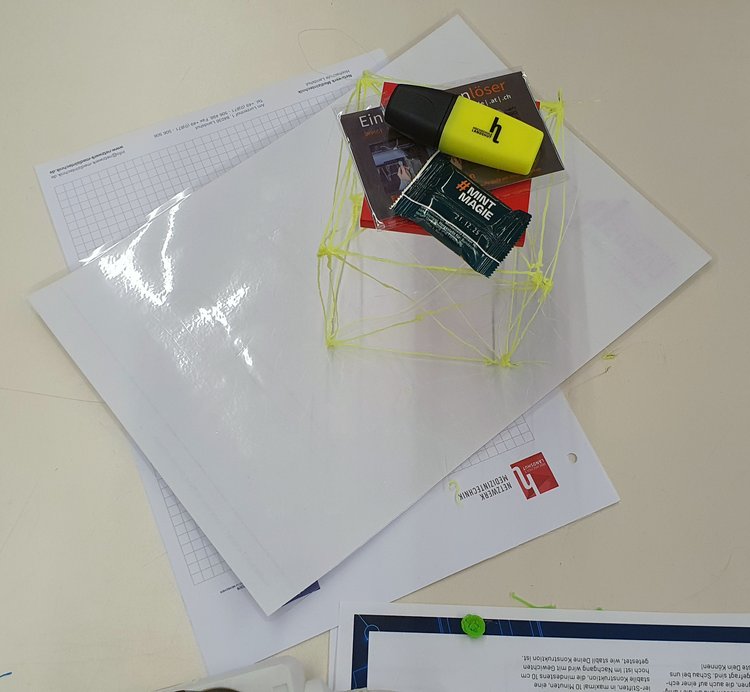
The challenge: Ingenious constructions with the 3D pen!
In just 10 minutes, the Vocatium participants had to build a stable structure at least 10 cm high using the 3D Doodler pens - the stability was then tested using weights.
Two opponents competed against each other over two days, with the pens in use at all times. Schools came specifically for the STEM stations, which attracted a large number of visitors.
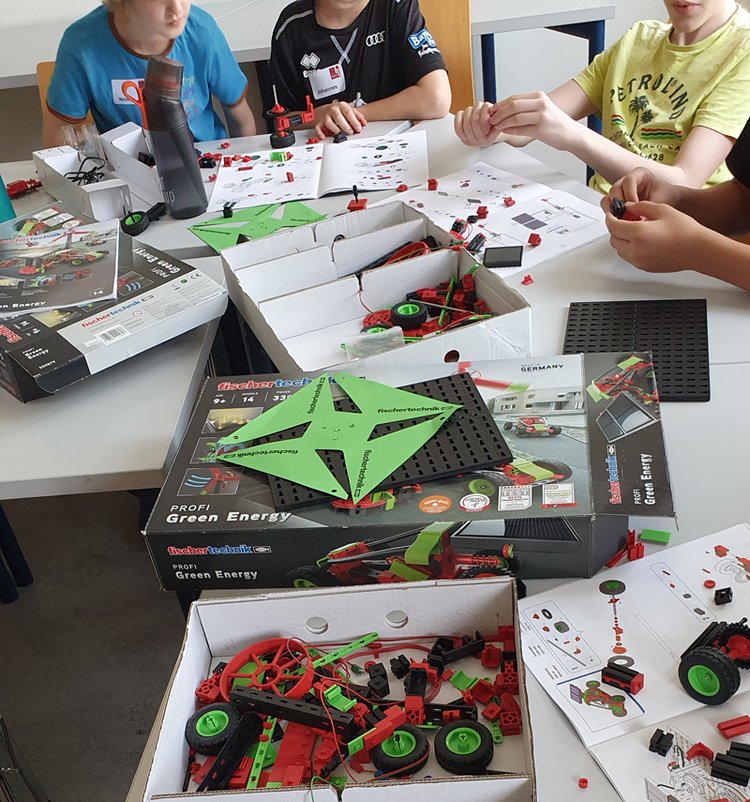
Discover renewable energies through play!
Pupils explored the world of renewable energies with exciting models powered by wind, water or sun. In addition, kits such as the H2 Fuel Cell Car were available to experience the functionality and advantages of fuel cell technology at first hand.
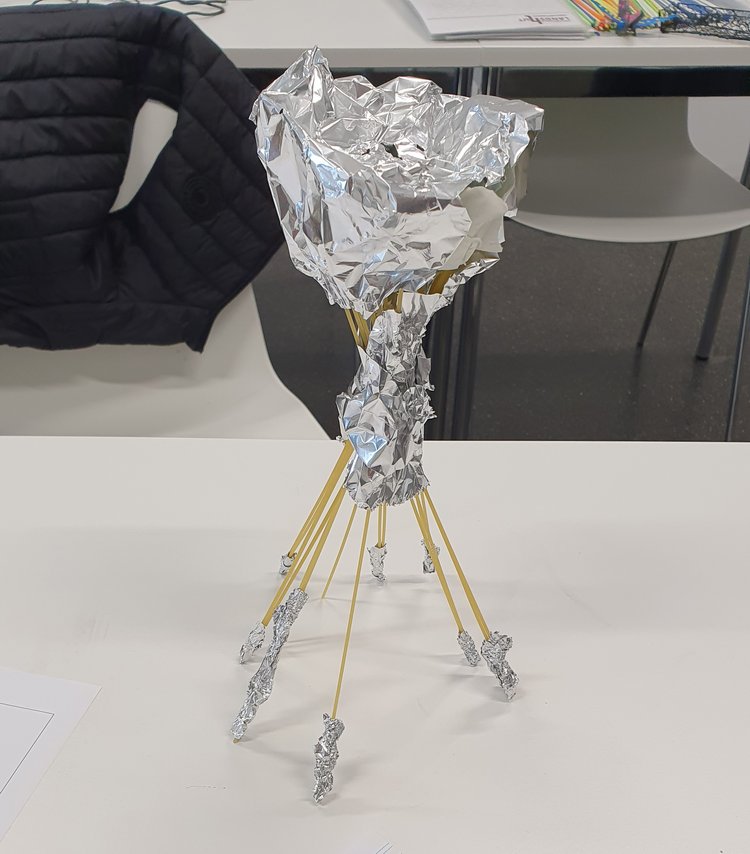
Two-part workshop: Help Harry & 3D pens
In our workshop, we combined the Help Harry project with creative work on 3D pens. This resulted in exciting design ideas such as spaghetti "shoes" and stabilisers. Thanks to the optimal amount of time, the participants were also able to realise larger projects - including impressive glasses, kites and many other creative works.
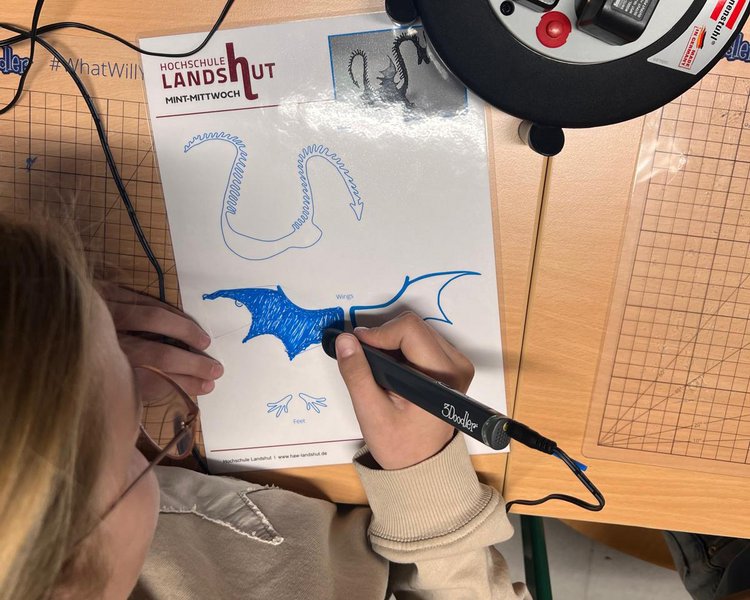
Research classes discover 3D pens
Three research classes from Ursulinen Realschule tried out 3D pens and realised creative ideas. Each participant had 45 minutes, supported by numerous templates and a large selection of colourful filament.
The lesson was accompanied by a student who presented her course of study, talked about her experiences and answered the pupils' questions.
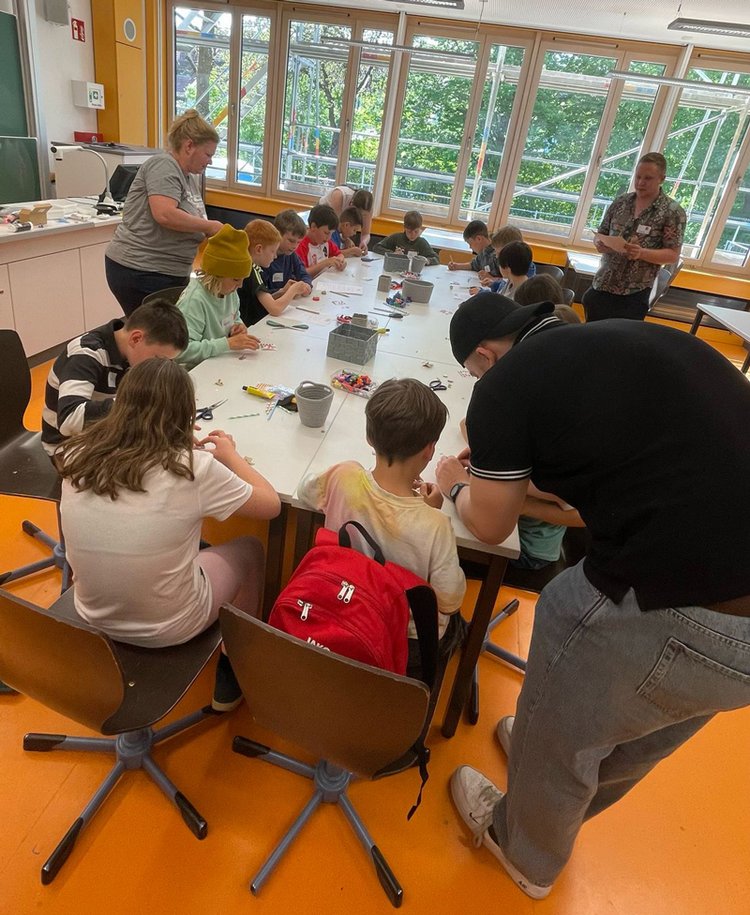
Researchers' Day at the HLG
The Hans-Leinberger-Gymnasium once again held its Researchers' Day - this time focussing on robotics. The pupils developed ideas for robots suitable for everyday use and enthusiastically built their own vibro-bots, which move through vibration. They were supported by students from various disciplines, who provided insights into their degree programmes and answered questions.

The shatterproof egg
The workshop playfully demonstrated how engineers work: Using paper, adhesive tape and wool, the participants had to protect a raw egg so that it could survive a fall from the second floor. Almost all the eggs remained intact - proof of creativity and technical skill. Broken eggs were also valuable, as they emphasised the importance of tests and improvements.
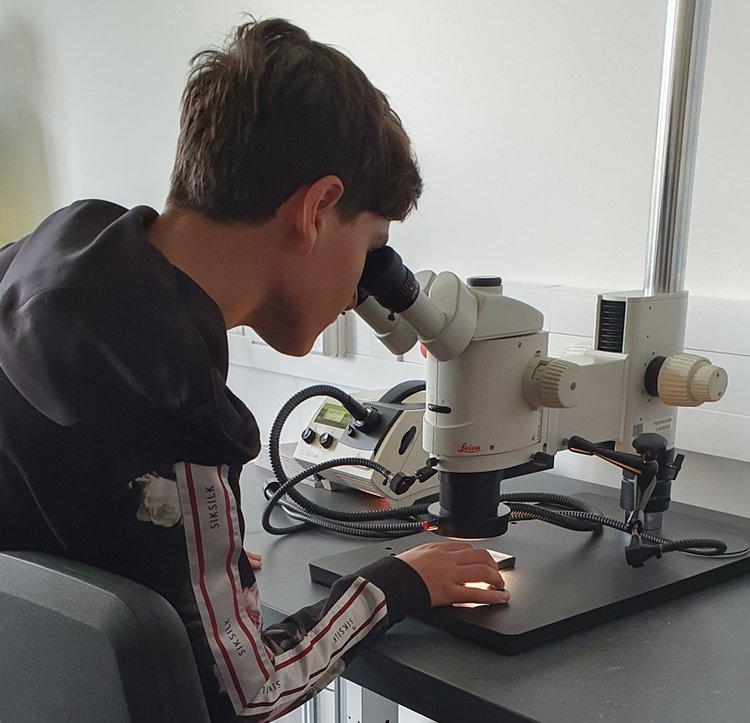
Vehicle laboratory and hydraulic engineering
After a guided tour of the vehicle laboratory, we were allowed to enter the world of the driving simulator. The new hydraulic engineering laboratory, where we were able to marvel at the flow channel, was also particularly impressive.
Florian Federmann gave us a visual explanation of how X-rays are formed. This prepared us for our visit to the computer tomograph (CT) and scanning electron microscope (SEM).
In the laboratory for building materials science, impressive micrographs of metal alloys were visualised under the microscope. Finally, we used AI to generate images.
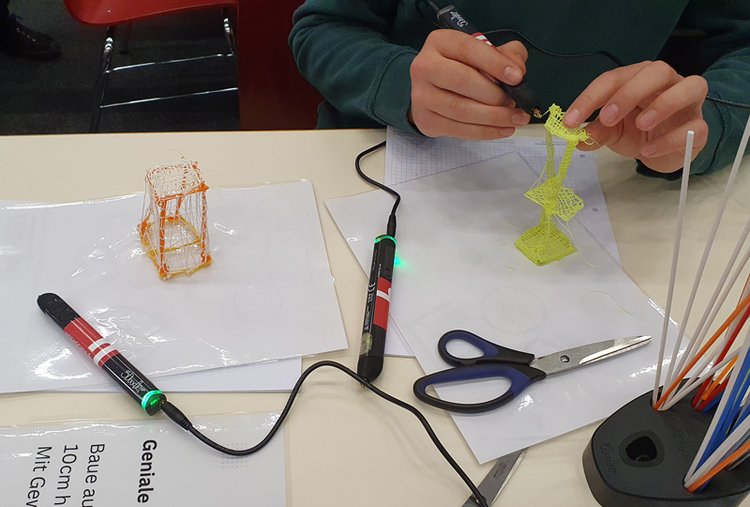
Career information fair
Our offer: "Wanted: Ingenious constructions with the 3D pen" was very popular with visitors to the careers fair at the Zukunftswerker stand. The challenge was to build a stable structure with a minimum height of 10 cm using only filament - in just 10 minutes! The stability of the structures was then tested with weights. The result? Impressive and extremely stable constructions that impressively demonstrated the creativity and skill of the participants.
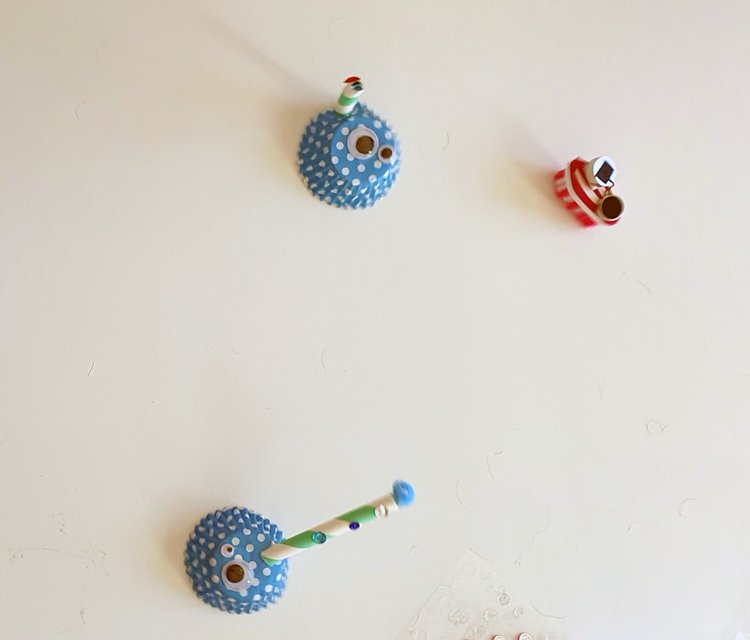
Vibro bots & creative with 3D pens
In two teams, we built small vibro-bots and gave free rein to our creativity with the 3D pens. The results included brush robots that moved around in a whirling circle and cupcake-shaped bots that not only ran around uncoordinated but also rattled. With the 3D pens, we created colourful models of glasses, stylish chairs and a variety of original glass coasters - real works of art of imagination and technology!
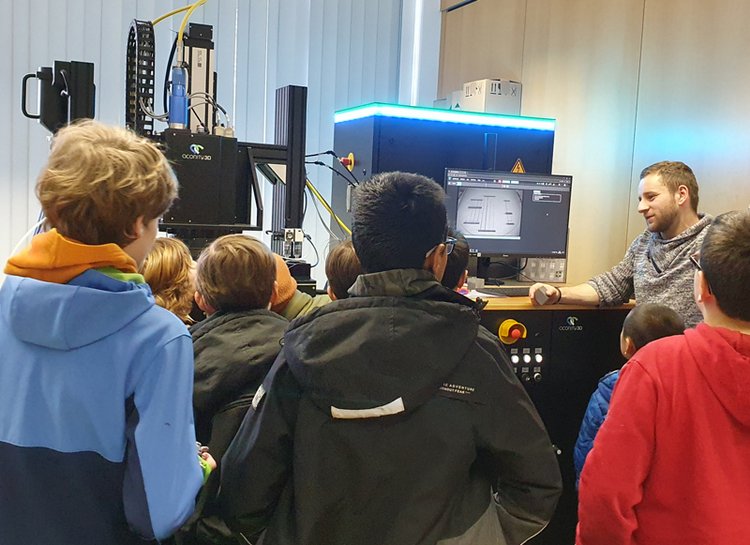
Lightweight construction & paper aeroplanes
The "Lightweight construction & paper aeroplanes" workshop began with a tour of the Faculty of Mechanical and Civil Engineering's lightweight construction laboratories. Mr Prager answered basic questions about lightweight construction and the use of the metal 3D printer and the shaker test bench. The participants then turned into creative engineers, designed their own flying objects and took part in an exciting paper aeroplane competition in four disciplines.
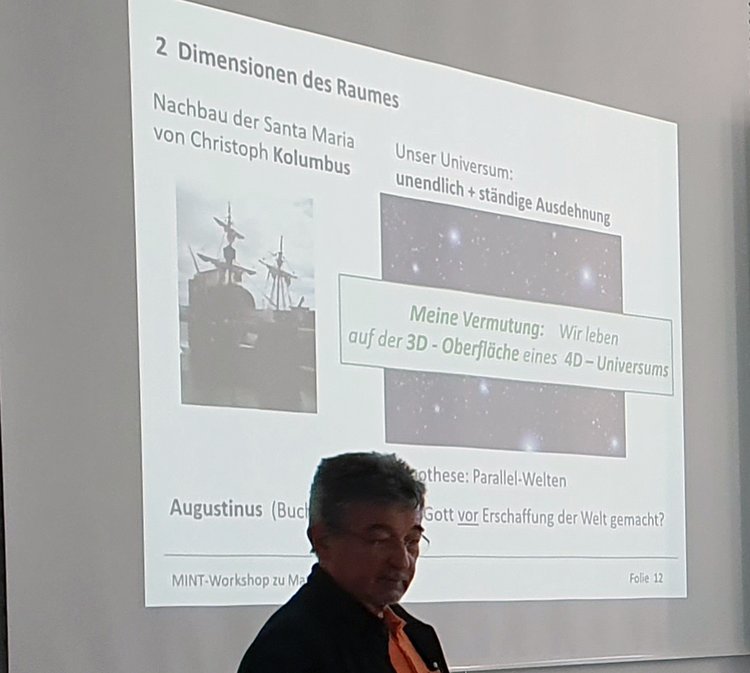
Infinity and chaos theory
The maths workshop: "Infinity and Chaos Theory" was led by Prof Dr Georg Ohmayer. The participants worked intensively on four fascinating topics: Infinity, the fourth dimension, chaos theory and fractal geometry. The feedback from the participants was extremely positive: "Everything was very interesting and topics were addressed that are rarely discussed."
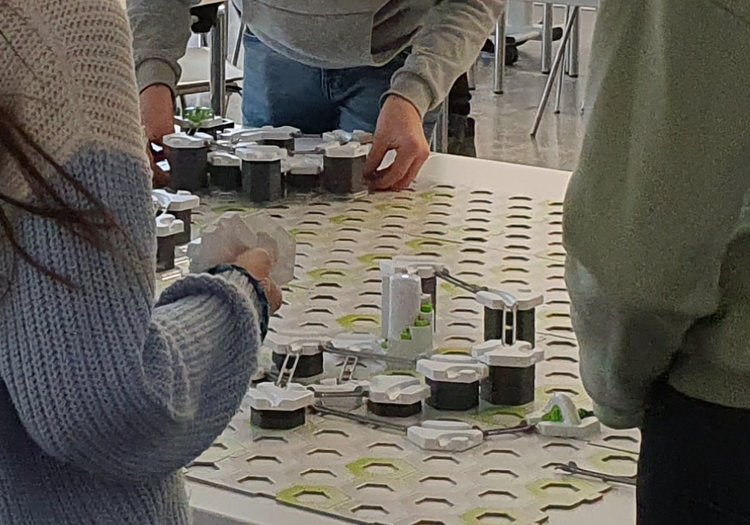
GraviTrax - MINT Forum Bayern e.V.
The "GraviTrax - marble run system" workshop was led by Christoph Neub. The participants put their creativity and skills to the test with two GraviTrax ball track systems, each equipped with 10 Gauss cannons and an impressive number of components. The task was: "Who can build the biggest track where the ball rolls the longest?" Two impressive super tracks were constructed and the balls rolled for an incredible 1 minute and 41 seconds.
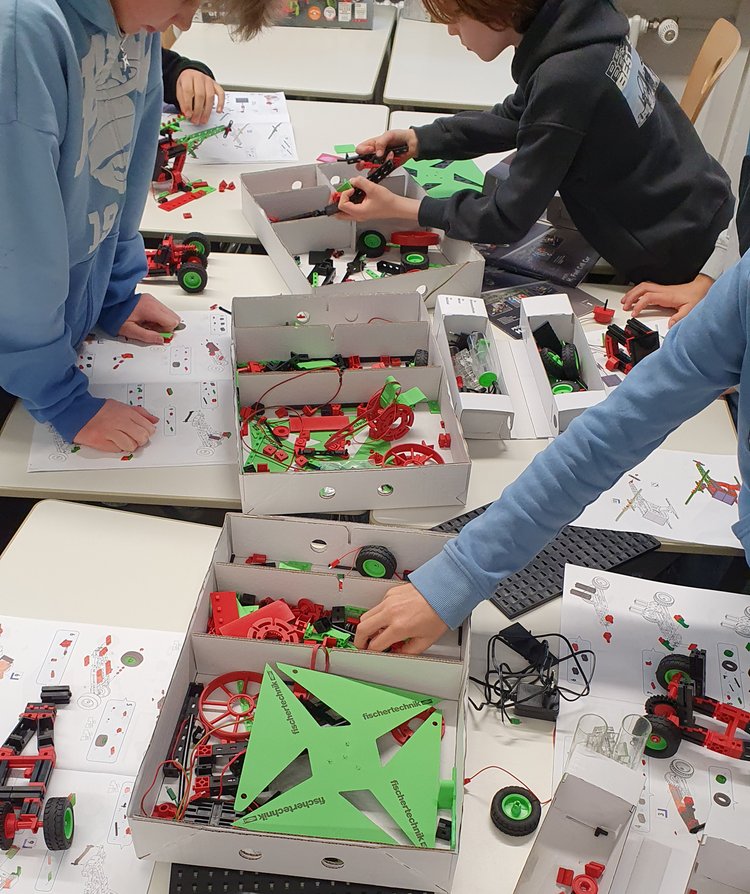
Solar helicopters, wind turbines & fuel cell cars
In our workshop, we built various models from the Fischertechnik Green Energy and H2 Fuel Cars construction kits. These included fuel cell cars, solar helicopters and solar-powered petrol stations.
These models demonstrated the use of renewable energy and how fuel cells work, giving us a deeper understanding of sustainable technologies. A film about fuel cell technology illustrated the chemical processes.
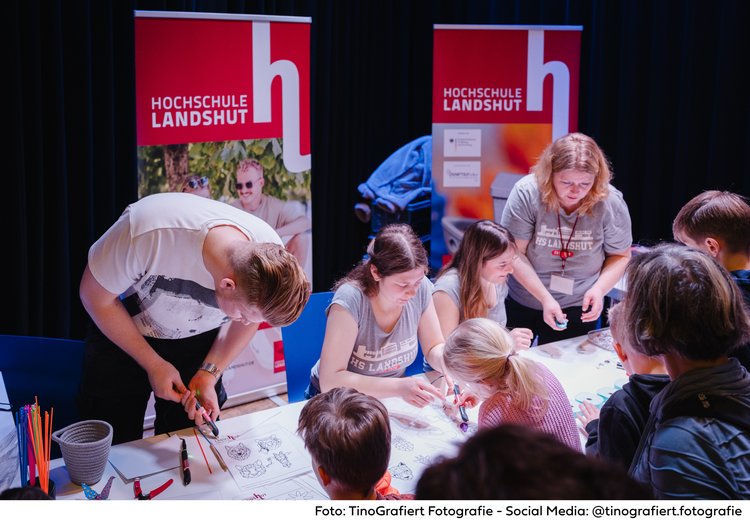
Regional MINT Day
Around 500 visitors came to the Alte Kaserne youth culture centre to experience the fascinating world of mathematics, computer science, natural sciences and technology (STEM) at the regional STEM Day. Organised by the MINT cluster "Zukunftswerker" in cooperation with Landshut-based companies, the event was a special experience for families, children and technology enthusiasts.
From 10 a.m. to 3 p.m., children and young people were able to get active themselves at numerous exciting stations, for example at Kreativ mit 3D-Stifte and Tüfteln von Jelly Bots.
3D workshop
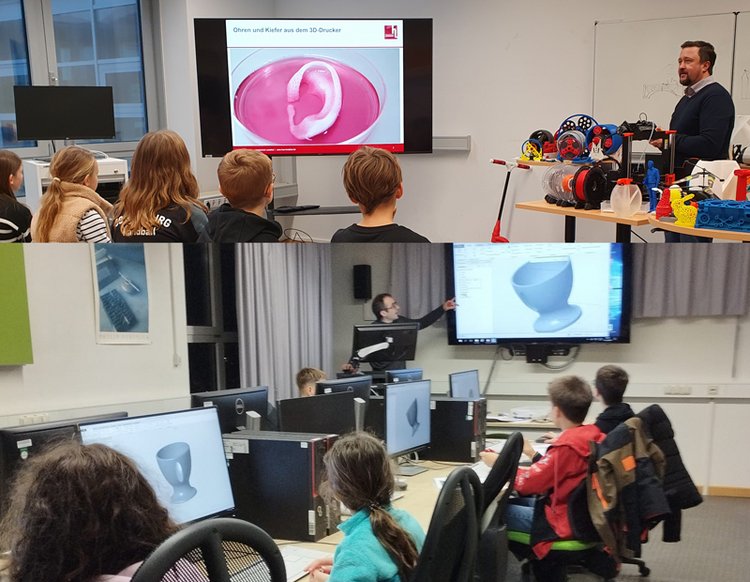
After a brief introduction to the most important 3D printing manufacturing processes, the participants had the opportunity to either design a product using a professional CAD programme or get creative with 3D pens (depending on their age and preferences). After the CAD creation, everyone received a product from the 3D printer. The 3D doodlers were used to create palm trees, animal faces, various animals and seasonal Christmas trees and baubles. The time flew by and many of the participants wanted to do it again soon.
Virtual Reality in Unity
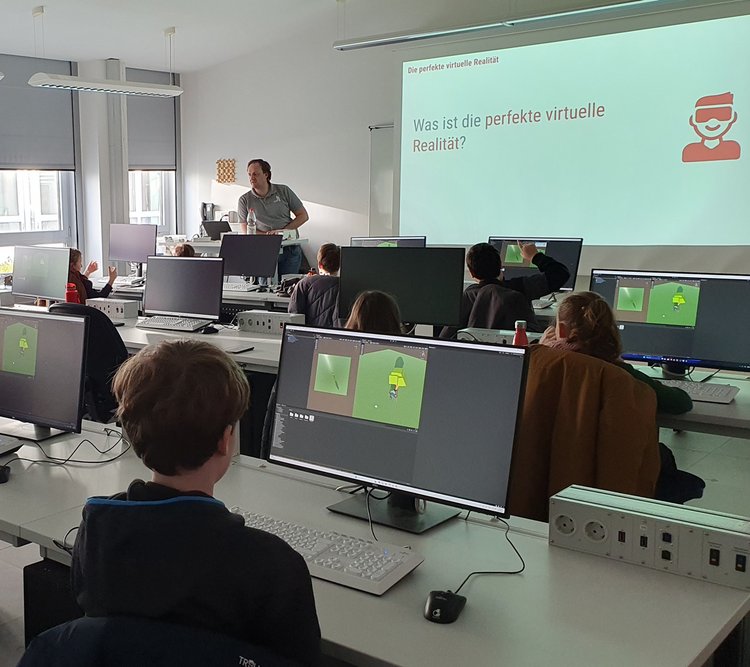
Prof Dr Christopher Auer introduced the participants to navigation with Unity, a software for game development and the creation of interactive 3D applications. You could customise and expand four different virtual worlds according to your ideas or start with a blank scenario.
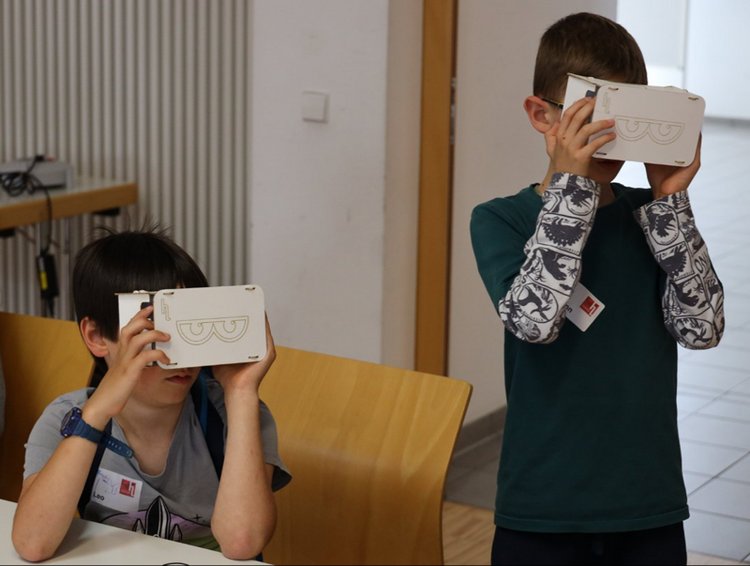
We then put together VR glasses made from Cardboard, which we used in combination with a smartphone to experience our virtual world up close from a first-person perspective.
The VR Cardboard glasses are developed and produced at the Faculty of Computer Science.
Die Zukunftswerker - Taking on all STEM talents
The "Zukunftswerker" project is being implemented with extracurricular programmes throughout the Landshut region. Together with the city of Landshut as the network coordinator, the following organisations are involved in the implementation of the "Zukunftswerker - alle Talente MINTnehmen" project:
- MINT service centre
- Landshut University of Applied Sciences (MINT Wednesday)
- MINT Forum Bayern e.V.
- Weltacker Landshut e.V.
- Silicon Vilstal gUG
- DOM e.V. (German-Russian House for Encounters)